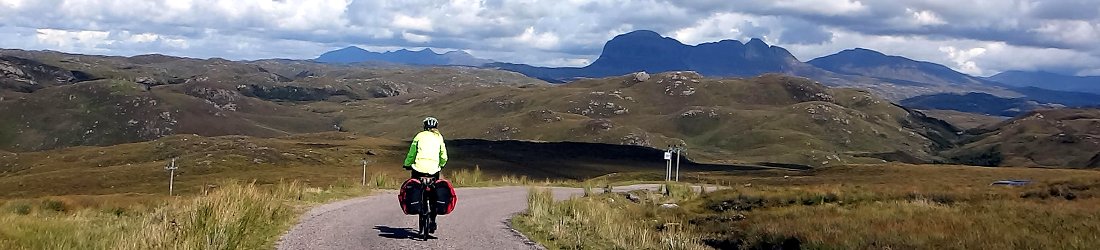

As we climbed higher into the mountains, the orchestra started tuning up.
The viola came first, a long, high note like the sound of a whistle.
It was answered by the first violin: another extended whine, higher still, from what seemed like a different part of the forest.
The viola responded with a deeper note, just as mournful.
The pattern was repeated again and again, but the orchestra never started playing the music. There were no warbles, trills or melodies like a song thrush might make after clearing its vocal cords. The sound of the orchestra tuning was the tune. It was slightly eerie until I got used to it, but it was mesmerising.

We heard this sound once or twice last year, while climbing Pico Duarte, at 3,101m the highest mountain in the Dominican Republic on the Caribbean island of Hispaniola, and also the highest mountain in the whole of the Caribbean.
We usually heard it in the deeper sections of forest above 1,500m, but only occasionally. We didn’t hear it at all during our travels in the jungle and mangrove swamps of Los Haitises National Park, but that was coastal forest. Whatever was making the sound was clearly a mountain dweller.
Edita asked one of our guides what bird it was, and she was given the name higuero or jilguero, clearly a local name rather than its official one. They said you could often hear the bird, but it was very difficult to see.
When I typed jilguero into Google after returning from our holiday, it came back with the European goldfinch (I think because of this page on the Spanish edition of Wikipedia), I knew it wasn’t a goldfinch though. We get dozens of those coming to our feeders here in the Cotswolds. They’re colourful birds and their song is lively, but we’ve never heard those mournful violins.
Now, on our second visit to the Dominican Republic’s Cordillera Central, we had chosen to climb Pico Duarte via the Mata Grande Route on the northern side of the range. This route is more remote than the standard La Cienaga Route that we climbed last year. It is less frequented and involves a longer trek through the forest.
Now the tune was all around us throughout the morning and afternoon. Usually we trekked alone and there was no one to identify the birdsong for us. But once when one of our guides was following behind us on his horse, we heard the sound again and Edita asked him what it was.
‘Higuero,’ he said (which could also be spelled jilguero). He said that it was an ibis and that it was ‘rojo y negro’ (red and black). This didn’t help us at the time, as we hadn’t seen it, only heard its curious call.
We never did see the bird, but we couldn’t forget that call like the sound of an orchestra tuning their instruments.
A few days after our trek finished, we were sitting in a restaurant high above the town of Jarabacoa, when curiosity got the better of me and I opened up the Merlin app on my phone. I use the Merlin app a lot when sitting in the garden back at home. If there is not too much background noise around you, such as the sound of traffic, Merlin is great for identifying individual birds by their song.
Edita had recorded the sound of the jilguero during our trek. If we played the recording to the Merlin app on my phone, would Merlin be able to identify the bird? We tried, but there was too much background noise in the restaurant and on the recording. Merlin drew a blank.
There was another possibility though. If you provide Merlin with your location, it will tell you the likely birds in your area. I knew there would be no jilguero nearby; although we could see forest below us, we were only at an altitude of 600m, far below the jilguero’s range. But Merlin would also let me set the location via a map.
I set the location to a random patch of forest a short distance below Pico Duarte. Merlin came back with a list of 129 birds.
There were only two ibises: the glossy ibis and the white ibis. Neither could be described as red and black, and both made the sound a percussionist might make by rubbing a pair of notched sticks together. Whatever our bird was, it wasn’t an ibis.
I tried listening to the calls of some birds that looked a bit like an ibis (a wading bird with a prominent bill), such as the snowy egret, the western cattle egret and the green heron. But these were squawkers, not musicians.
Then I started going through the whole list one by one and playing their calls (luckily, we were the only people in the restaurant). It was a labour-intensive task, but it was also an easy one. There were no calls that could even closely resemble the jilguero.
On the 31st bird, I struck gold. The sound was unmistakable, though it was somewhat matched by the sound of Edita and myself squealing in unison.

The bird was mostly light grey, though the darker grey of its hood and cloak could be mistaken for black. There was a prominent ruby patch on its throat.
It was no ibis though. It was the rufous-throated solitaire, described as ‘a medium-sized resident of dense, moist montane forests’ with a song that is ‘a series of drawn out, uninflected flutelike whistles given at varying pitches’.
It was no orchestra, but a single musician playing long, weeping notes in succession.
There could be no doubt that we had the right bird. There on the Wikipedia page for the rufous-breasted solitaire was a section on local names, and lo-and-behold ‘In the Dominican Republic the bird is called “jilguero”’.
The rufous-throated solitaire is a member of the thrush family, about 20cm in size, found only on six Caribbean islands: Jamaica, Hispaniola, Dominica, Martinique, St Lucia and St Vincent. Each island has its own subspecies, but in each case the song is the same, first note low, second high, third low.
The mystery was solved with the help of King Arthur’s wizard, but if I ever return to Pico Duarte, I will have to take the more traditional item of a pair of binoculars, or I don’t think I will ever get to see this blighter.


I am not a birder and only an armchair climber, but the search for the rufous-throated solitaire was totally engrossing. Thank you so much.